How AI is Changing the Way We Decide What to Cook
AI isn't just for tech companies. Here's how artificial intelligence is making dinner decisions easier for home cooks.
Artificial intelligence has transformed how we navigate, shop, communicate, and work. But one of the most practical and relatable applications of AI is one that doesn't get enough attention: helping people figure out what to eat.
Not in a futuristic, robot-chef way. In a practical, everyday, "it's 6 PM and I don't know what to make" way.
The Dinner Decision Problem
Every evening, millions of households face the same question: what's for dinner tonight?
It sounds simple, but it's actually a multi-variable optimization problem:
- What ingredients are available?
- How much time is there?
- What are the dietary preferences or restrictions?
- Who is eating?
- What's the budget?
- What have we eaten recently?
- How much energy does the cook have?
Solving all of these simultaneously is hard for humans. It's exactly the kind of problem AI is good at.
How AI Approaches Food Decisions
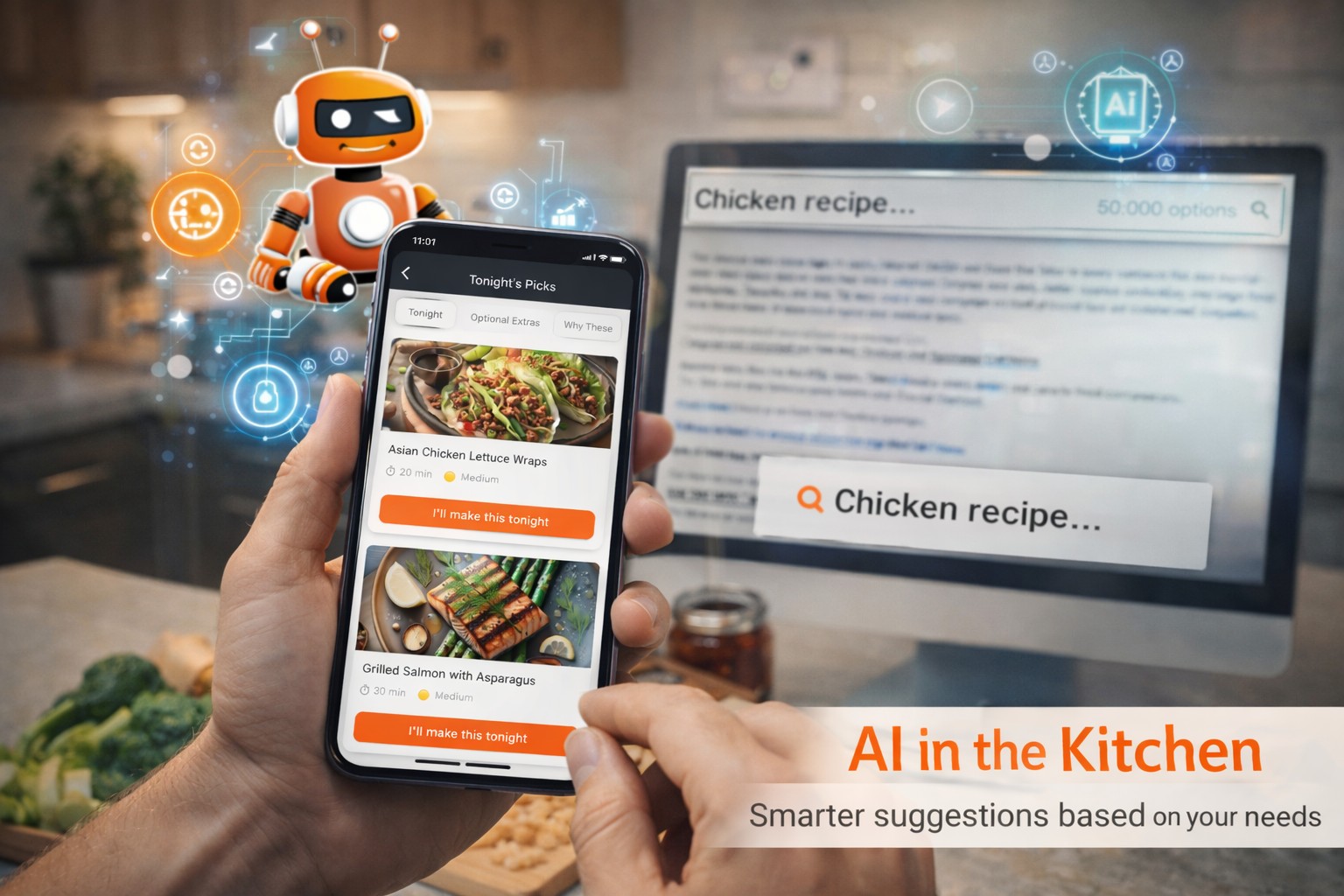
Traditional recipe apps work like search engines: you type in a keyword, and they return hundreds of results. You're still doing all the filtering, evaluating, and deciding yourself.
AI-powered food tools work differently. They take your inputs — ingredients, time, mood, preferences — and generate a small number of highly relevant options. The AI does the filtering and matching for you.
Key Capabilities
- Ingredient matching: AI can analyze what you have and suggest meals that use those specific items, without requiring an exact recipe match
- Preference learning: Over time, AI learns what you like and don't like, making better suggestions
- Context awareness: AI can factor in time of day, energy level, weather, and dietary needs
- Waste reduction: By building meals around available ingredients, AI reduces food waste
- Personalization: Every user gets different suggestions based on their unique constraints
What Makes This Different from Recipe Search
The fundamental difference is this: recipe search gives you options and leaves you to decide. AI-powered dinner decisions do the deciding for you.
| Traditional Recipe Apps | AI-Powered Dinner Decisions |
|---|---|
| Thousands of results | 3–5 targeted options |
| You filter and choose | AI filters and recommends |
| Based on keywords | Based on your actual situation |
| Same results for everyone | Personalized to you |
| Requires browsing time | Delivers answers in seconds |
The Real-World Impact
When AI handles the dinner decision:
- Less time wasted: No more 30-minute recipe browsing sessions
- Less food waste: Meals are built around what you already have
- Better nutrition: AI can balance meals over time, not just per-meal
- Lower stress: Removing a daily decision reduces cognitive load
- More cooking at home: When deciding is easy, cooking becomes the default over ordering out
Privacy and Trust
A common concern with AI food apps is data privacy. What you eat is personal information. Responsible AI food tools should:
- Let you control what data is shared
- Not sell your food preferences to advertisers
- Be transparent about how your data is used
- Work well even without extensive data collection
Where This Is Heading
AI in food decision-making is still early, but the trajectory is clear:
- Smarter suggestions: As AI models improve, dinner suggestions will get more accurate and creative
- Connected kitchens: Integration with smart fridges and pantry tracking will automate ingredient input
- Health integration: AI could factor in nutritional goals, allergies, and health conditions
- Family coordination: AI could manage preferences across multiple household members
How Dishli.ai Uses AI Today
Dishli.ai is an example of AI applied to everyday dinner decisions. It doesn't try to replace cooking — it replaces the hardest part of cooking: deciding what to make.
You tell it what you have, how you feel, and how much time you have. It gives you realistic options. You pick one and cook. That's it.
No browsing. No decision paralysis. No guilt about wasting ingredients. Just dinner, decided.
The best technology is the kind you barely notice — it just makes your life a little easier. That's what AI should do for dinner.